







With a notarised translation, an additional step is added to our certification note: a notary confirms the authenticity of the signature of the person who produced the translation. That is the difference from office certification – and the reason why this option is frequently chosen by courts, civil registry offices and the commercial register.
Important to know: the notary does not check the content of the translation. The notary confirms that the signature is genuine. Our specialist translators vouch for the accuracy and completeness of the translation with their stamp, signature and certification note.
When this option is frequently chosen
Notarised translations are required, for example, by the civil registry office of the Canton of Zurich, by Swiss courts and by commercial register offices. Typical occasions are naturalisation, marriage, divorce, estate matters, company formation and the recognition of foreign judgments. Requirements differ considerably from canton to canton and from office to office – we know the usual practice and prepare your documents accordingly. The final word always rests with the competent authorities; if you have any questions, we are happy to help.
An overview of all the options – from office certification through to consular legalisation – can be found on the page Certified translations.
The certification chain – step by step
- Translation: a qualified specialist translator produces the translation; a second pair of eyes checks names, dates and figures.
- Certification by us: the translation is firmly attached to the copy of the source document with a certification note, stamp and signature.
- Notarisation: the notary confirms the signature of the person who produced the translation.
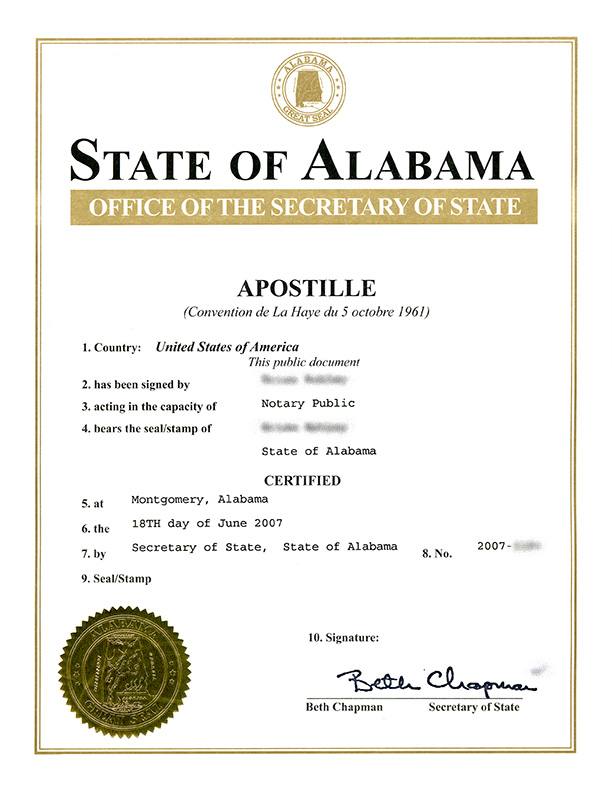
- Optional for use abroad: apostille for states party to the Hague Convention – or super-legalisation followed by consular legalisation for all other countries.
You do not have to take care of any of these steps yourself: on request we handle the notary’s office and the State Chancellery completely and deliver a document package that is ready for submission.
Documents that are frequently notarised
- Documents from the civil status register (birth, marriage, death)
- Court judgments and divorce decrees
- Wills, certificates of inheritance and notarial agreements
- Contracts, general terms and conditions and non-disclosure agreements (NDA)
- Deeds of incorporation, articles of association and commercial register extracts
- Diplomas, certificates and academic transcripts
- Powers of attorney, statements in legal matters and legal opinions
- Minutes and patents
Process, timing and delivery
Upload your document as a scan or a clearly legible photo via the quote form and tell us the target language, the destination country and – if you know it – the receiving authority. Within 30 minutes during office hours you will receive a binding quote with a fixed price and delivery date.
As a rule, allow one to three working days for translation and notarisation; with an apostille, one to two working days are added for the State Chancellery. We check express options on request and confirm the date bindingly in the quote. Delivery is by A Mail, registered post or – if the receiving authority accepts digital submissions – in advance as a PDF with a qualified electronic signature.
Your documents are transferred in encrypted form and treated confidentially; everyone involved signs strict confidentiality agreements. What a notarised translation costs can be seen under certified translation costs.
Request a no-obligation quote now – answer within 30 minutes during office hours.
FAQ
What exactly does the notary confirm?+
The notary confirms the authenticity of the signature of the person who produced the translation – not the content of the translation. Our certification note with stamp and signature stands for the accuracy of the content.
Is office certification enough, or do I need a notary?+
That depends on the receiving authority. For many universities and employers, office certification is sufficient; courts, civil registry offices and commercial register offices frequently choose the notarised option. Just tell us the body – we will advise you free of charge. The final, binding decision always rests with the official receiving authority.
Do you need my original document for the notarisation?+
Usually not: the notarisation relates to the signature on the translation, not to your original. A scan is enough. If the receiving authority expressly requires a notarised copy of the original, tell us – we will clarify the procedure in advance.
How long does a notarised translation take?+
Usually one to three working days; the notary appointment mostly falls on the day after the translation is completed. If an apostille is added, allow one to two further working days for the State Chancellery. We check express options on request.
Is a notarisation also valid abroad?+
For use abroad, the apostille is usually added, and for states outside the Hague Convention, super-legalisation and consular legalisation. On request we organise the entire chain for you.